Reframe! #18

3 things that made me think differently and why they matter.
1/ Notice
People are choosing to limit online activities.
I read this post by Chip Conley.
For one month, I will be completely off the grid. No phone. No internet. No news. No email. No digital breadcrumbs suggesting I still exist. From the outside, it will look like I fell off the planet.
He's planning to take a month off.
I did something similar last Summer.
It was cathartic.
Chip has put more structure around this time off than I did. He frames it as time "to be". Each morning, he's starting with no agenda and four simple questions:
What do I want to do today?
Where do I want to go?
Who am I today?
And why am I living?
Spend time away from the status-quo schedule and roles... these become hard questions... with profound answers.
I see similar upward trends... off-grid cabins; analogue hobbies; dumb-phones; timed screen lock boxes; blocking software.
Why are more and more people doing this now?
Perhaps it's about reclaiming personal identity in a world where our attention is stripped bare, and we are spoon-fed desirable lifestyles, based on other people's priorities.
Screens go dark tomorrow, how much of your life would be your own?
2/ Do
Deliberate Practice is a structured way of learning through experience.
You don't rely on a textbook, or a 'sage on the stage' trainer.
Instead you use feedback and intentionally target your performance gaps. That means using your initiative and stepping outside your comfort zone.
It's the best way I know for systematically improving capabilities.
Don't just rely on repetition. Aim for personal growth.
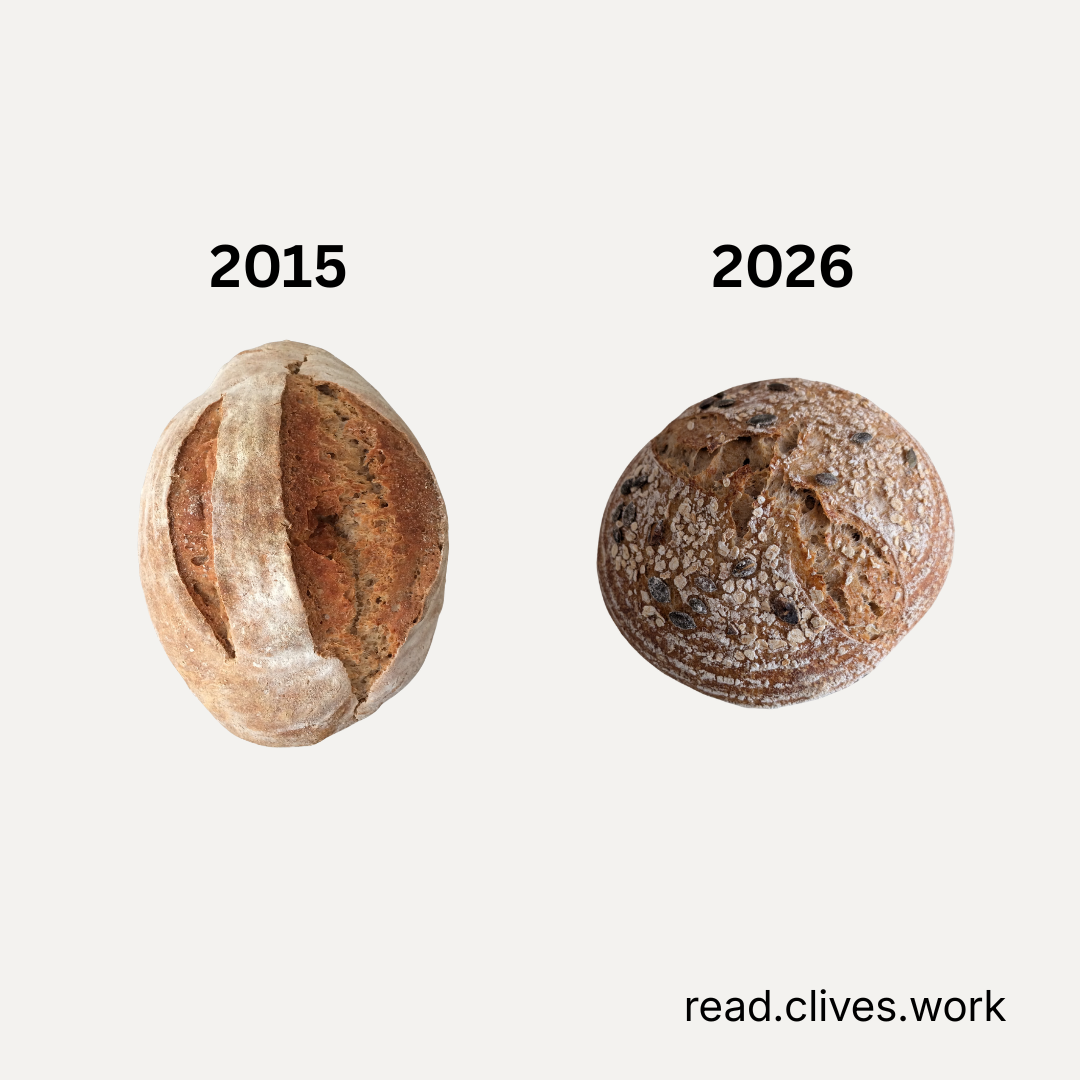
The photo shows my baking results in 2015.
Not terrible but certainly not great either.
I was determined to improve.
And the contrasting result from this week.
My March 2026 loaf is a significant improvement.
Yet, I won't settle. I want it better. I have a goal in mind.
Deliberate practice.
Driven by you - the practitioner.
Supported by a mentor's feedback.
Somewhere you want to improve?
Try this:
- Identify a micro-skill that needs work.
- Write out your current approach and ask a mentor for blunt feedback.
- Take their advice, practice the refined version until it feels natural.
- Once you're comfortable test it in a live situation.
3/ Question
Are you listening to that person on your team who is already telling you the uncomfortable truth?
The quiet partner.
The sceptical operator.
The junior asking sharp questions.
Your future is often sitting in the voices you miss.
A few examples to stimulate your thinking:
“She’s raised the same issue three times, but I keep telling myself she’s being too cautious.”
“He asks awkward questions in meetings, so I move on before they slow us down.”
“I say I want honesty, but I reward agreement far more than challenge.”
Ask yourself: Where do I invite candour in theory, but resisting it in practice?
If you enjoyed this please give me a shout out on LinkedIn.
That's it until next week.
Clive
The Sunday Dispatches Newsletter
Join the newsletter to receive the latest updates in your inbox.