Complex Change


Leading change in organisations takes exceptional skill.
There's complexity and a vested power base to consider.
Stakeholders tend to consider their own agenda first. And change won't stick if the leaders can't align these. It takes creative collaboration to make that happen.
Communicating WIIFM for multiple domains, and across multiple boundaries.
Which is a massive challenge to do at scale.
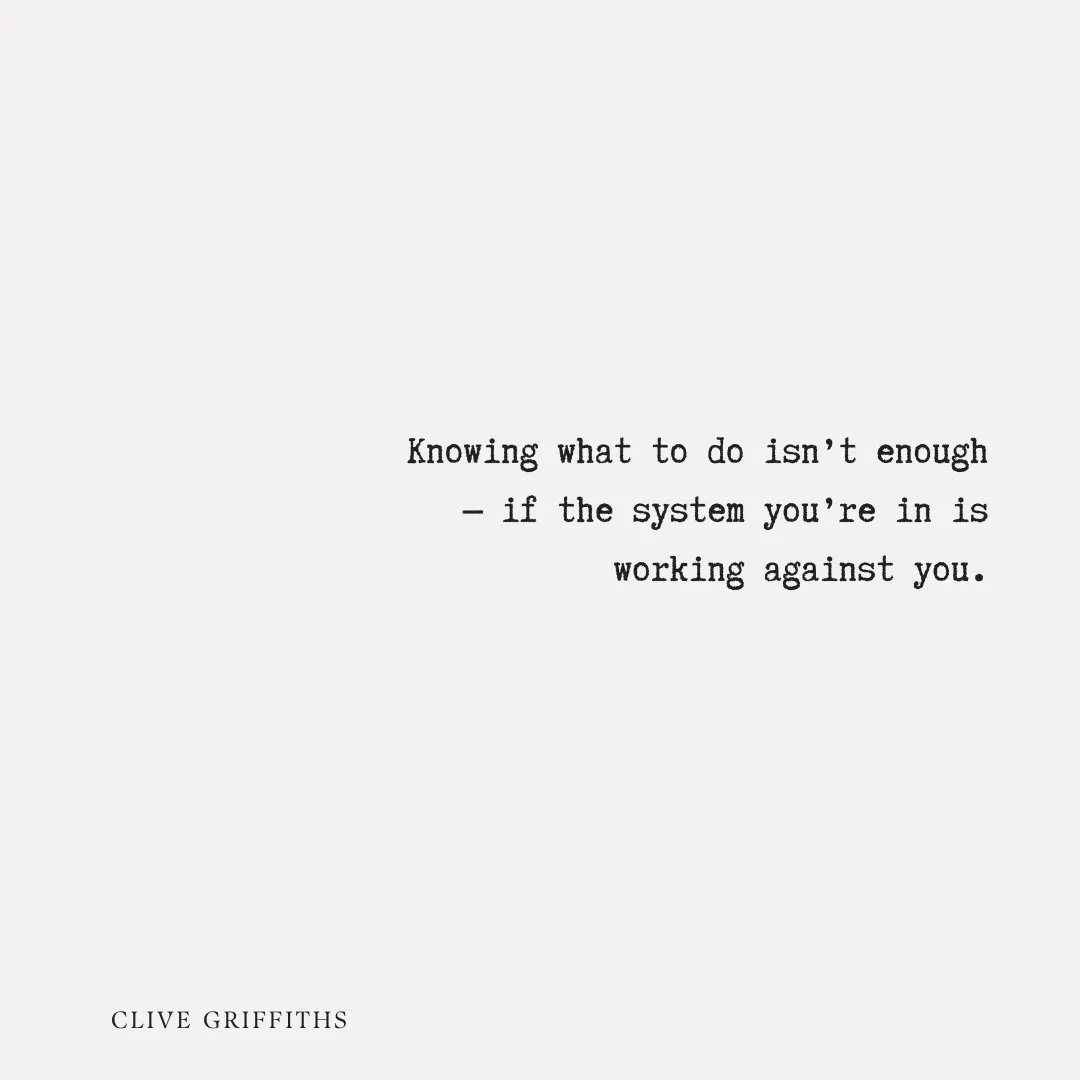
So, the temptation becomes to use simplistic initiatives. But then when one part of the system gets changed, there are unexpected consequences elsewhere. Some initiatives do have predictably negative outcomes, if looked at through the lens of common sense.
Actually common sense should be on the checklist. It rarely is.
That's one reason I'm concerned when I hear leaders say 'back to basics', when they want culture change. Basics won't penetrate organisational brick walls, which are designed to preserve an institution's status quo.
Exceptional results are possible though, when individuals are persuaded to put their ego to one side for a common purpose and shared values. I've seen this.
The Sunday Dispatches Newsletter
Join the newsletter to receive the latest updates in your inbox.