Email Outreach
If the prospect doesn’t know you, and your first 30 words don’t grab their attention they'll swipe left.

I get to see, critique, and edit a lot of outreach emails written by consultants.
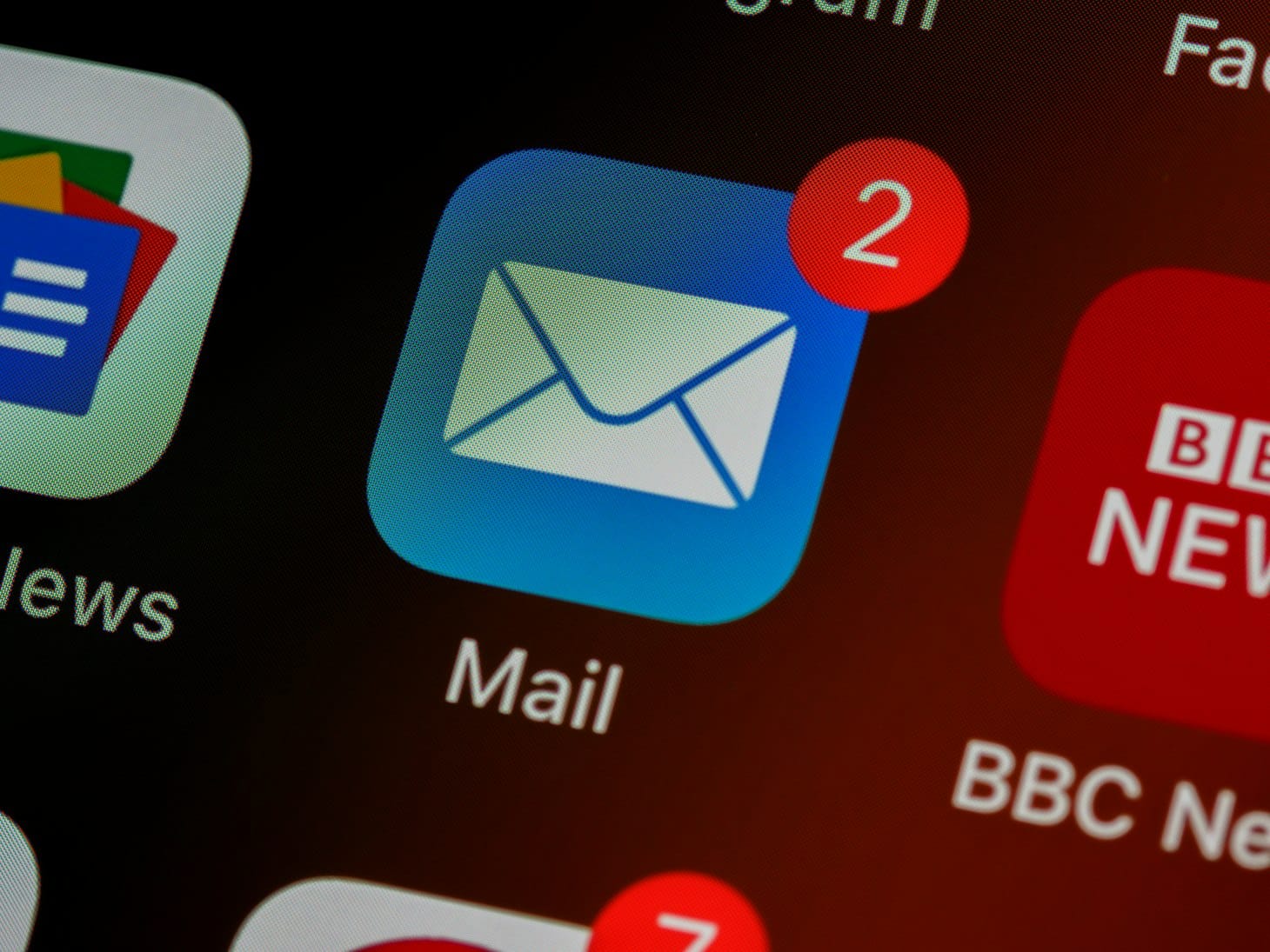
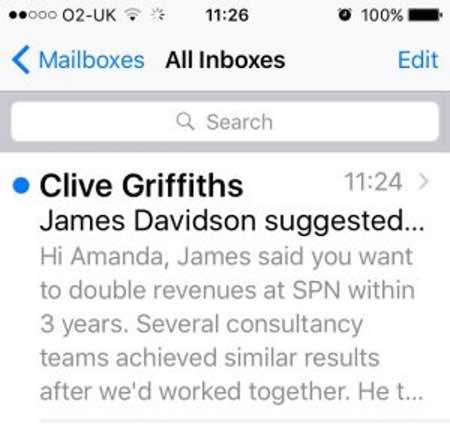
I always start by putting myself in their prospect's shoes. Then I look at the email on an iPhone (with a 5 line preview*) and sense what I’d do. In the majority of cases I don’t even open it.
This is the first insight about outreach email. If the prospect doesn’t know you, and your first 30 words in the iPhone preview pane don’t grab their attention they'll swipe left. Delete.
It’s heartbreaking isn’t it? You’ve spent hours crafting your message, thought hard about the best time to send it, and then your prospect doesn’t even read it.
Lesson 1: Rapid Context Setting
This first lesson is about getting your opening words to do their job. Which is getting the prospect to open and read the rest of the email.
Here are three examples of different emails that use Rapid Context Setting to establish significance early.
i) The referral email
If you’ve been referred to the prospect use that in the subject line. Then continue in the body text with the reason for the referral. Example:
Subject: James Davidson suggested we speak about sales growth
Hi Amanda,
James said you want to double revenues at SPN within 3 years. Several consultancy teams achieved similar results after we'd worked together. He thought you'd be interested in that.
...
ii) The event email
Search for events that signpost contexts where new ideas are of value to prospects. These might include newly hired executives, mergers and acquisitions, losing (or winning) a big client, etc. Example:
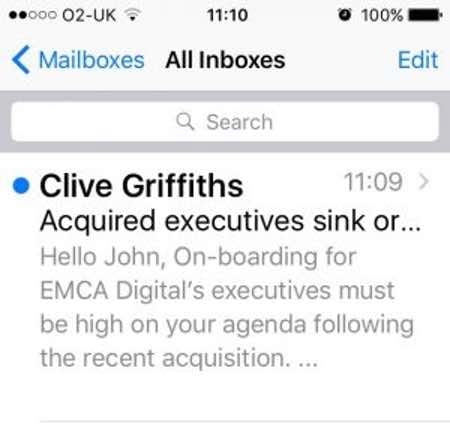
Subject: Acquired executives sink or swim
Hello John,
On-boarding for EMCA Digital’s executives must be high on your agenda following the recent acquisition.
...
iii) The strategy hijack email
Link your idea to the prospects key growth strategy. That might be something like moving into a new market segment, entering a joint venture partnership, setting new industry standards, etc. Example:
Subject: Setting new standards for retail procurement
Hello Linda,
The article in the Grocer said your ambition is to set new standards for retail procurement This transformation is a huge challenge, which is why I’m writing to you.
...
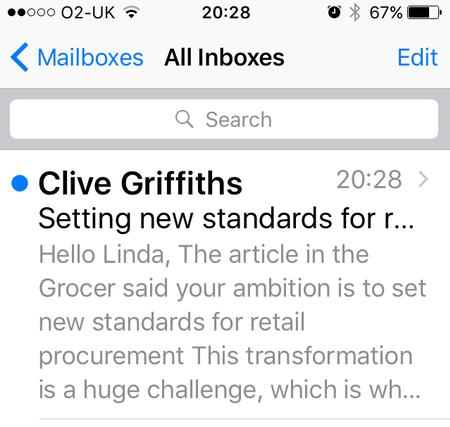
You can see in each example how Rapid Context Setting gives the prospect a reason to open and read the full email. That's the first outcome you want.
The bottom line
You have 30 words to get a prospect's attention. Go back now and look at the iPhone preview panes. Put yourself in the shoes of a time-starved executive. Would you open these emails?
* If the prospect has set less than 5 lines to preview then that increases the challenge.
Lesson 2: Matter of Interest
The first lesson introduced the idea of Rapid Context Setting as a way of gaining the prospects attention. Someone asked me if I had examples of emails where consultants got this wrong. Disclosing specifics isn't appropriate, but the most common mistake I see is the self-referenced email. These are full of statements like this:
- I noticed …
- I wanted to …
- I’m reaching out …
Anything that says I, we, or our, really. Moving on …
This lesson is about opening the prospects mind and making it easy to accept your offer. Until then.
Typically consultant emails I’ve edited attempt to sell credibility. They write about what they do, who they’ve worked with, and the awards they’ve won. Things like:
We’re a digital agency specialising in social media campaigns …
We’re got 10 years in executive team development working with …
You know the kind of thing. You might even have sent this type of email yourself. They don’t work. Sorry to deliver the bad news, but your prospect isn’t interested in what you do, or your consultancy achievements.
Yes, occasionally these statements hit a prospect at exactly the right time and they’ll contact you. More likely though …. they’ll swipe left. Delete.
A better approach is to focus entirely on the likely issues and opportunities the prospect has. That’s what they’re interested in.
What does that look like?
Here are the three different examples from last week, now fleshed out to follow the attention grabbing opening with a paragraph that develops interest.
Notice how each addresses a Matter of Interest for the prospect, as a means of positioning the consultant's expertise. The emails get the prospect's head nodding because their thinking, “this person really gets it”. That’s what convinces them you're worthy of more of their time. That's the outcome you're aiming for.
i) The referral email
This email starts with the referral connection and quickly moves into a dialogue about the importance of high-value projects for growing consultancies. It builds interest by mentioning three areas that can hamper growth efforts and then hints at another 6 areas that need consideration. The curiosity to know what these creates desire for a proper conversation.
James Davidson suggested we speak about sales growth
James said you want to double revenues at SPN within 3 years. Several consultancy teams achieved similar results after we’d worked together. He thought you’d be interested in that.
New high-fee projects are vitally important to growth. And you’ll find client loyalty, resourcing, and influential C-level relationships impact your ability to win these. In fact there are another half-a-dozen areas in total that you might want to consider.
If you're interested in a conversation about this please let me know, my number is 07801 106 061.
Regards
Clive Griffiths
ii) The event email
The second email is a cold contact. It gets attention using a critical event that's a Matter of Interest for the prospect. There's a smart piece of name dropping that develops this interest by referencing a similar high-profile situation, where there was a high-risk of disenfranchising key executives. And the offer to share what was learnt in a 1-page summary (1-page for a busy C-level executive). This may convince the prospect to make contact.
Acquired executives sink or swim
On-boarding for EMCA Digital’s executives must be high on your agenda following the recent acquisition.
Do you know Donna Fisher, she’s the CEO at Jacobson Pharmaceuticals? They’ve just completed an on boarding project for their joint venture with PJ Chemicals. We worked with Donna to capture some of the critical learning from the experience - particularly around retaining high-potential executives.
If you're interested in learning more about this please let me know by email. I’ll forward a copy of the 1-page summary report.
Regards
Lindsey Charles
iii) The strategy hijack email
The final email is also a cold contact. This one gets attention using acknowledgement of the prospect's ambition. Setting standards and high-performance are a Matter of Interest for them and the email continues by connecting the consultant's discoveries as directly relevant to these. An executive briefing for the prospect's team may be a compelling offer that captures executive's imagination. The offer is useful, low key, and non-pushy.
Setting new standards for retail procurement
The article in the Grocer said your ambition is to set new standards for retail procurement. This transformation is a huge challenge, which is why I’m writing to you.
I have an executive briefing your team might find useful, it covers 5 things we’ve discovered coaching teams to higher performance - one of which is standard setting.
I’ve attached a 1-page summary. If you’d like more details - after you’ve read it - please drop me an email.
Sincerely
Jack Stoneman
You can see in each example how a Matter of Interest encourages the prospect to keep reading by keeping their mind open (Note: A bullet point list of services does the opposite). It makes it easier for them to be convinced by your offer when your email resonates with their experience and priorities. If it doesn't then at least you've positioned yourself as a business advisor, not as a services vendor. In future dealings that could make a massive difference.
The bottom line
High-level decision makers aren't looking for consultancy. They want external advisory and execution partners who help them create value. And that's what your outreach emails must position - your thinking and ability to create value.
Lesson 3: 10 tips for tenacious follow up on emails
Now let's look a how best to follow-up when prospects don't reply to your initial email.
You’ve written this great email. You’ve sent it to your prospect. You’ve waited for a reply. Nothings come back. What do you do?
The first thing to appreciate is that a non-reply is not the same as flat out rejection. A flat out rejection is the reply that tells you to ‘sling your hook’.
The second thing to appreciate is that if your prospect is a corporate decision maker they’re going to be really busy. They may have read your email, thought “this looks interesting” and filed it for action.
You've got to give the prospect chance to respond to your email. But if they don't here are some tips on the follow-up.
- Remember the shelf-life of an email is about 3 days. If you’ve not had a reply within that time ... take action.
- Start by following up with a phone call … not another email. If you don’t have a direct contact number for the prospect, call their office and ask to be put through.
- Be prepared for the prospect to answer the phone, because they just might. You don’t want that to throw you out.
- If they don't answer you have a couple of choices. You can leave a compelling voicemail, or not. Make sure you practice any voicemail messages at least three times before you make the call.
- You may call back again and ask for the prospect’s Executive Assistant. Be prepared to engage them and explain why you need to talk to their boss.
- Scripts are useful. Write down what you want to say. Make it it sound like you’re speaking, not reading a script.
- Remember to keep your messages client focused. It's not about you ... it's about results and a business proposition. And sound like a business peer, not a sales person.
- Have a second, and third, voicemail message up your sleeve. Keep calling every 2-3 days and keep it light.
- After the third message stop leaving voicemails. If the prospect wanted to talk to you they probably would have by now. There's a line between being persistent and being a pest.
- It’s now probably two-weeks since you sent your original email. It’s time to send a closing email with your contact details and a ‘lifeline’ for the prospect to get in touch if they change their minds.
That’s it. If you’d like to learn more about working on outreach emails with me please get in touch.
The bottom line
Think of the outreach email as the start of a campaign to connect with the prospect. You have to be active in following up. Think about what else you might combine with emails to get yourself on their radar.
Lesson 4: Before you send that email - a quick checklist
It's the most prolific form of business communication. Yet none of us got taught how to write email at school.
So we get emails with long, unstructured prose. Content that combines chit chat with management speak. "I hope this finds you well ... blah blah" "It's a win-win, data-driven, paradigm shift. We should have a chat about it."
For me brief, straightforward, emails are best. Not everyone likes or approves of that style. Some say emails should be longer, lay out more of the story, be more emotionally engaging.
I disagree. I'm working from a premise that people in corporate organisations are crazy busy. And I've done my research. Decision makers get over 100 emails. That's a lot of text to read, consider, and process.
So I try to make it easy for them by structuring my emails and getting to the point. Here's the checklist I use - before pressing send.
- Is there an attention grabbing subject line?
- Is there something of interest for them, not me?
- Is there a compelling reason to do something?
- Is there a crystal clear request and call to action?
- Is there any unedited chit chat or waffle?
- Are there less than 120 words?
- Is there a structured and logical flow?
- Is this email client-oriented, or self-oriented?
- Did I use my manners?
- Is this email useful?
- What value has been given?
- Why are you not making a quick call instead?
Try using the checklist, not just for your marketing outreach emails, but for all emails. Notice the responses you get.
Lesson 5: How to improve the odds of reaching prospects by email
The owner of a technology firm asked me how to improve the odds of reaching prospects by email. He’d tried in the past without much luck. We talked about the issue and came up with four simple rules for future outreach.
Rule 1. Do your homework.
It sounds obvious, but make sure you’re landing in the right person's inbox, with the right message. Invest time researching your prospect and their organisation. Look at their LinkedIn profile. Do you have a mutual connection? Check the news. Are there any recent trigger events? What’s happened that's newsworthy?
Action: Look for creative and unique ways to connect.
Rule 2. Put yourself in the client’s shoes.
Decision makers get hundreds of requests to connect. Hundreds. Now, think about the way they process email. Chances are they’ll scan their inbox on a smart phone. Swiping left to archive email that isn’t immediately relevant. Stopping briefly to read anything that looks helpful to their immediate agenda. You need to get the client's attention first. Is your email a swipe (trash), or press (read)?
Action: Choose your email subject line and first 25 words mindfully.
Rule 3. Shorter is better.
Hurrah! They're interested. They stopped and are reading your email. So, make sure it gets to the point quickly. Limit yourself to five sentences. Say just enough to explain why they need to connect with you. Answer this question, "What’s in it for them?"
If you writing more than two paragraphs they will probably stop scanning and file your email to read later. (Which means they’ll never get around to reading it again, right?)
Action: Edit your email tightly and make sure the value is clear.
Rule 4. Make action easy.
Imagine you’ve kindled the client's interest. Now you’re obliged to show them the path of least resistance for moving forward. Let them know exactly what they need to do next, how to do it, and when.
Action: Spell it out. Keep it simple. One request only.
Lesson 6: 4 more rules for reaching out to executives
Lots of advisors suggest outreach is a numbers game, where you monotonously grind out emails, LinkedIn requests etc. But if you want quality connections, with senior executives, it's not about numbers and grind. Outreach requires thoughtfulness ... word craft ... sequencing ... and resilience.
1. Dive deeper
Nowadays executives are pestered to connect, asked for information etc. Just put yourself in their shoes and imagine what it feels like to have this day-in, day-out. Thoughtfulness begins when you ask yourself questions like:
- What's important enough for this executive to want to connect with me?
- Where can I add value to their agenda?
- How do I make it low risk for them to agree to connect?
2. Write to influence
Lots of outreach is shallow, self-serving. and self-referenced. Alongside the content of your message you must figure out things like:
- What will I say to capture this person’s attention?
- How can I signpost that connecting with me is useful for them?
- How will I make my email easy to read?
3. Nurture before your ask
Too many attempts of outreach are ... in the words of the late, great, David Bowie ... Wham! Bam! Thank You Ma'am! Almost as soon as the introduction is out of the way they're making a big ask, too big an ask for a first date. Stand out from the crowd by - from the outset - taking a nurturing approach to the relationship. You can begin with an experiment using a sequence of four reaches, the last one of which is an ask. Try these at 2-3 week intervals. Try other sequences with 5 or more reaches. Notice the results you get.
- First reach - generously ask for nothing other than to connect, keep it light.
- Second reach - give, or hint at having, something of value.
- Third reach - ask the executive for a tiny little favour related to the problems you resolve. Perhaps answering a simple question.
- Forth reach - ask for the meeting where you want to talk business.
4. Pick yourself up
Even when you've taken time to think about the other person's agenda, craft a collaborative message, and use a nurturing sequence ... you'll still get rejection, often for reasons that are nothing to do with you. For some people this stings and they get despondent. For others it is like water off a duck's back and they just crack on. Neither of those responses is particularly useful, instead ask yourself:
- What can I learn from these outreach experiences? Try an after action review.
- What is my emotional reaction when I'm rejected by other people?
- What else might I try (later) to connect with this person again?
Outreach is strategic, it requires a plan. Let me know how you get on.
Lesson 7: They're just not that into you
You know those suspects and prospects? The ones you're chasing. You've sent them several emails, left voicemails, sent a text ... yet nothing happens.
Well here's the thing ... they're just not that into you … because they’re not motivated enough.
Before reading more, remember: With suspects we’re in marketing mode and with prospects we’re in sales mode.
Suspects: You’ve chased for meetings. They’re ghosting you. It’s because they have no good reason to meet with you … yet. Making suspects feel they have an expensive issue, that needs their attention. That’s marketing.
With suspects you must ensure you’re in pole position when they ‘get it’, so they turn to you for help.
Prospects: You’ve had conversations that seemed to go well, but end up nowhere. Sadly the prospect’s desire for that proposal has withered away. Helping prospects feel a high level of motivation to take action, then helping them decide what to do. That’s selling.
With prospects you must ensure projects are underpinned by an expensive issue ... and that there is a massive pain, or gain, attached to that issue.
And realise that you can chase suspects and prospects as much as you like ... woo them ... give them a free sample ... write a proposal … but they won’t be compelled to action until they feel something first. That’s human nature.
So, this week’s mini-mission.
Go through your suspect and prospect list. Just pick one person to begin with. Now figure out:
- What expensive issue will make them take action?
- What pain, or gain, are they experiencing that will compel them to so something soon?
- How will they know you’re the best bet to help them with this issue?
This mini-mission can help you to see exactly how to get them into you. And, if you do that, they may even end up being the ones doing the chasing. Wouldn’t that be cool?
Lesson 8: How to get amazing email responses - case study
This week a client told me about their tremendous 80% take up rate. This was for an email they'd designed to get meetings with top executives.
What's the secret behind this success? My clients did four simple things extremely well:
Irresistible offer
Knowing exactly what’s keeping the target executives awake at night. Those issues were positioned front and centre.
Finite target
Selecting a small number of quality prospects to approach. Instead of blasting an email out to their entire prospect database a subset were selected, filtered by potential to invest and previous positive connections.
Curiosity not credibility
Eliciting an emotional state. Rather than go on and on about views on the issue, or credibility and proposed solution, the email gave away just enough to make the executive … curious.
Simple call to action
It was clear what action was needed. A brief meeting was asked for. It was made very easy for the executive to respond and say yes.
So, what lessons can we take forward from this?
- Decide who you want to serve. The world isn’t your oyster when you sell consultancy. Target only a tight group of potential clients you want to meet. You might start with a list of 250 organisations you can potentially work with. Whittle that down to a maximum of 25 organisations and create a list of executive names in those organisations. They are your primary targets.
- Know the people who’ll buy from you. Immerse yourself in their world. Develop views about the issues they face and the opportunities they want to pursue. Work out how you might overcome the barriers and risks they perceive. Be the type of consultant who challenges clients and says ‘this is typically what keeps my clients awake at night ... I think there is something that can be done about it … if that resonates with your experiences then I'd like to meet you.’
- Write sales letters that highlight the issues and hint that you might just have something a bit different that will be valuable to the prospect. That doesn’t mean you need to splurge your point of view all over the email. You want to sell just enough to get the prospect to take a meeting with you.
- Arouse the prospects curiosity. Then offer a meeting with you so they can satisfy that curiosity. Don’t write in generalities. Prospects get dozens of emails a week from consultants offering leadership development, supply chain reviews and all the other gubbins.
- Make it easy for the prospect to say yes to your offer. So many sales emails are about the seller. They are also long, boring and convoluted. Keep your emails short. Get to the point. Ask for what you want. In most cases that’s a meeting. In which case ask for 30 – 45 minutes somewhere that’s convenient for them, not you. Better still an initial 15-minute phone call to test the water.
An 80% success rate is rare. So perhaps it’s worth taking the lessons from this and applying them to your next campaign. You might even try a split-test against less responsive emails you’ve sent in the past. Rework them using this approach and see how take up rates improve.
The Sunday Dispatches Newsletter
Join the newsletter to receive the latest updates in your inbox.